

Heavy snow fell from southern Connecticut through the Hudson Valley and into parts of upstate New York on Friday, while most of Long Island saw between 2 and 6 inches of snow.
Meanwhile, the New York City area accumulated just under 3 inches of snow as difficult travel conditions are expected into Saturday morning as crews work to clean up this winter mess.
The winter storm is beginning to end, but some light snow and a wintry mix will remain through Saturday along the I-95 corridor as an additional inch of snow and a light coating of ice will be possible across the region.
Meanwhile, low temperatures across the Northeast from Washington, D.C., and Pittsburgh to the north and east will be near or below freezing Saturday night, allowing any sleet or snow still on the ground to refreeze.
Another system will move through the region Sunday night into Monday, but it will be mostly rain, although a wintry mix will be possible at higher elevations.
This weekend, a storm system will move across the country, bringing more snow to the west of the Interior Mountains on Saturday and eventually rain to the east on Sunday.
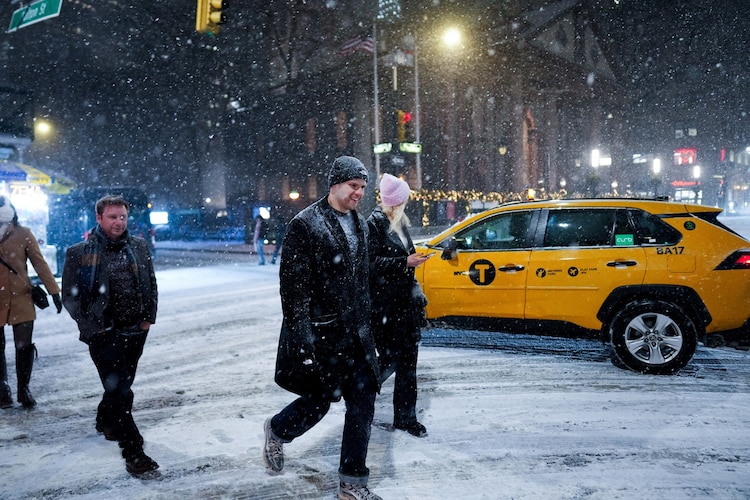
People cross the street as snow falls during a winter storm in New York City, US, December 26, 2025.
Adam Gray/Reuters
On Saturday, the Rocky Mountains will receive snow from Idaho and Montana to Wyoming and Colorado. On Sunday, some snow may remain in the Colorado Rockies and northern New Mexico.
Most of these mountain areas will see up to a foot of snow, but some areas could see up to 18 inches.
On Sunday, rain will increase across the Midwest from Kansas and Missouri to Ohio and Pennsylvania, while isolated storms are possible from Arkansas to Ohio, some possibly strong enough to produce gusty winds and perhaps an isolated tornado.
This system is expected to continue moving east Sunday night into Monday, bringing rain to most and freezing rain to parts of northern New England.
Next week is expected to start off wet for the East on Monday and will bring mostly rain to the East Coast, with some snow and a wintry mix possible for the Great Lakes.
Most of the country should experience dry, calm weather ahead of New Year’s Eve, with the west seasonally warm and the east seasonally cooler.
After the New Year, a new weather pattern will persist into early 2026, as warmer temperatures should persist across most of the west and reach into parts of the south.
Meanwhile, the Upper Midwest and Northeast will be on the colder side with an active pattern of fast-moving systems possible.


