
A job report that will be published on Friday will show if the resistant labor market continued to challenge the commercial uncertainty and the recession concerns fueled at the rates of President Donald Trump.
The new data, which details hiring in May, reveal the performance of a key measure of economic health as Trump receded some of the “Liberation Day” rates imposed one month earlier.
Economists expect the United States to have added 125,000 jobs in May, which would be equivalent to solid employment growth, although a marked deceleration of 177,000 jobs added a month earlier.
The growth of expected employment in May would arrive below the average of 157,000 jobs added in the last 12 months.
A commercial agreement between the United States and China in May cut the Tit -for-OT rates between the two largest economies in the world and caused an increase in the stock market. In a matter of days, Wall Street companies softened their recession forecasts.
The agreement between the United States and China took weeks after the White House stopped a large strip of Trump’s “Liberation Day” tariffs aimed at dozens of countries. Trump also facilitated the specific rates of the sector aimed at cars and retreated the tasks of some goods in Mexico and Canada.
Even so, a general 10% rate applies to almost all imports, except semiconductors, pharmaceutical products and some other items. These levies are at the top of the specialized rates on steel, aluminum and cars. China, the third largest American commercial partner, faces 30%tariffs.

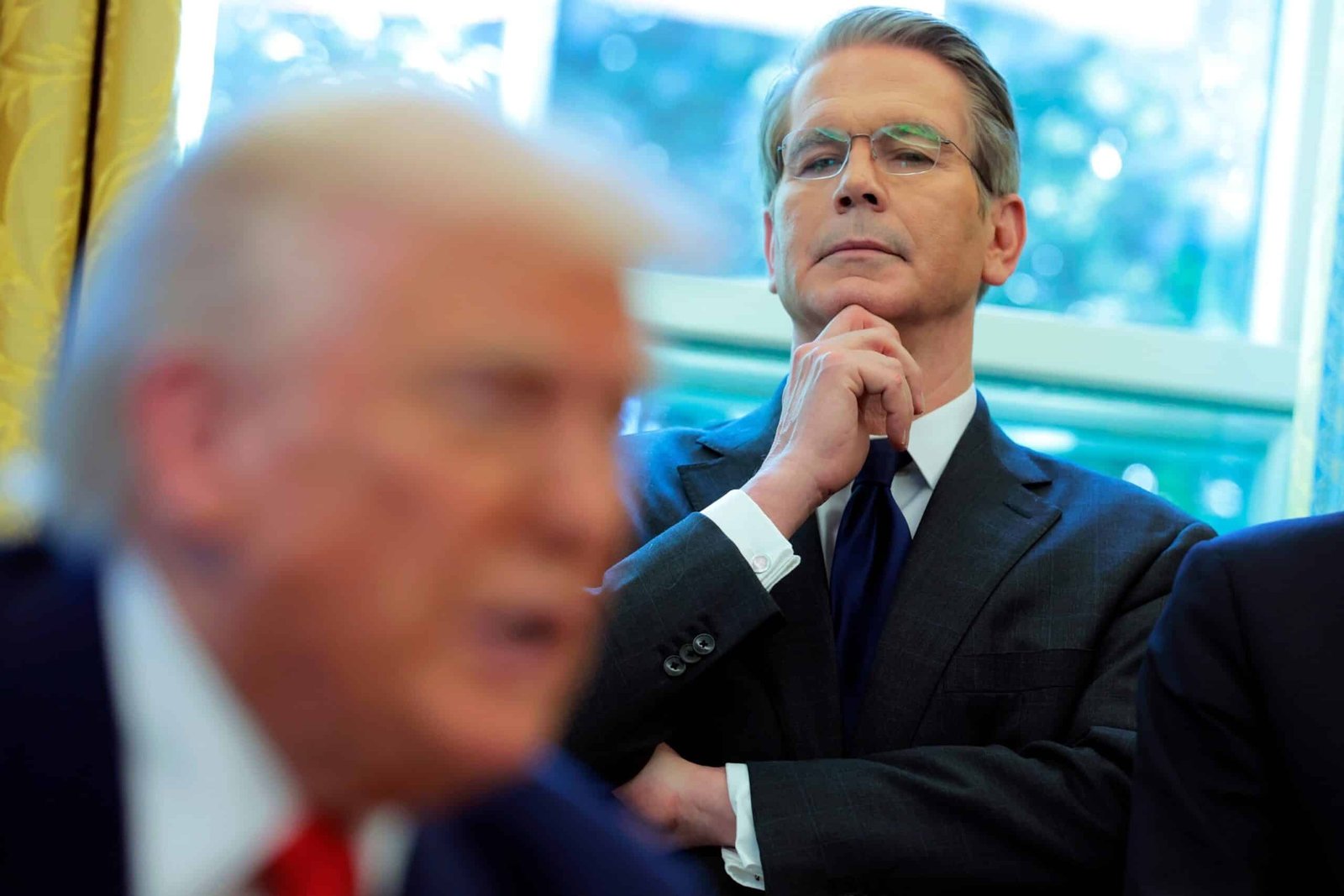
In this archive photo of April 9, 2025, the Treasury Secretary, Scott Besent, observes while President Donald Trump signs Executive Orders at the Oval Office of the White House, in Washington, DC
Anna MoneyMaker/Getty images, file
A large number of important companies as distant as Pepsi, Goldman Sachs and Target have warned that they can suffer losses due to uncertainty linked to rates again and out again.
Retailers nationwide such as Walmart and Best Buy have also expressed an alarm of potential price increases as a result of levies.
Consumer spending, which represents approximately two thirds of the economic activity of the United States, could weaken if the appetite of buyers decreases due to the expensive imports. In theory, a slowdown in spending could hammer some companies and trigger dismissals.
Until now, however, the key measures of the economy have largely challenged the fears of a recession.
The unemployment rate is historically low level and the growth of employment remains solid, although it has slowed from the previous maximums. In recent months, inflation has cooled, reaching its lowest level since 2021.
The Organization for Economic Cooperation and Development, or the OECD, predicted continuous growth for the US economy in 2025 and 2026, although at a slower pace than last year.


